Mga Pahina

Lunes, Agosto 19, 2013

HIGANTI (REVENGE) "Short Film"


Short film requirement for our Humanities subject. I was one of the actors, and the film editor as well. The film is about a girl who is a victim of bully harassment. She then later realized on defending herself in the name of every girl who has ever experienced the senseless cruelty of other people. She did it by pushing around weaker people.

- ClarissaAlimot

NSTP FILM (FORTITUDE, EXCELLENCE, UPRIGHTNESS) - MC1122


(Film requirement for NSTP. I was one of the actors on this film.)

           Having the FORTITUDE to face problems, showing EXCELLENCE in all you do, and devouring UPRIGHTNESS in every single way completes each successful person’s journey.

            With enough preparation and teamwork, we were able to produce our very own film for NSTP. This film comprises four stories, each of which has its own value to portray.

            First is the FORTITUDE. In the story, the main character faced her problem with enough strength and courage.

            Second is the EXCELLENCE. Camy, acting as the main character, showed his excellence despite those hindrances that almost blocked his way to achieve his goals.
            Third is UPRIGHTNESS. The character with main role showed her honesty by telling her friend that there is negotiation that is happening between her and the drug pusher.

            Fourth film showed those three values in one entry. Kevin as the main cast, does everything with enough fortitude, he showed great excellence, and he was always being upright no matter what.

            This requirement was made not just for compliance, but to learn and apply it to ourselves as well. I know we did a great job because everybody has contributed their potentials. Time, money, and effort will never be put into waste because we know that after this film was produced, each of us had our own different learning to apply in our daily lives.

- CLarissaAlimot

Linggo, Agosto 18, 2013

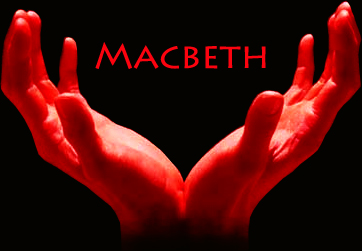
Macbeth


                  Macbeth is a tragic play written by William Shakespeare which centers the evilness of Macbeth as he wanted to conquer power through immorality. The play is considered one of Shakespeare’s darkest and most powerful tragedies. According to Wikipedia, the play dramatizes the corroding psychological and political effects produced when its protagonist, the Scottish lord Macbeth, chooses evil as the way to fulfill his ambition for power. He commits regicide or the killing of the monarch, to become king and then furthers his moral descent with a reign of murderous terror to stay in power, eventually plunging the country into civil war. In the end, he loses everything that gives meaning and purpose to his life before losing his life itself.

(Here is the animated version of Macbeth. Clip from YouTube)

                   The animated film version on Youtube summarizes the story of Macbeth. The story can be well understood although there were some missing characters which is of great disadvantage especially to those who have seen the story for the first time, like me. As always, the story written in the books is always better than those in the film versions wherein some details are omitted. But the advantage of seeing the film first, there will be no hard time in visualizing the events that is happening inside the story. No need in imagining how a character does this or that because it is already given. So when it comes to the book version, it can already be easily understood.

                     I consider Macbeth as both moral and immoral play. The play somehow depicts how actions for self-indulgence and insecurity bring no good to a man. There would always be an event that will make you pay for everything that you have done wrong to someone. Just like what happened to Macbeth. At the end of the day, he still paid what he has done to those people that he killed. The immorality of the story comes when ambitions go beyond moral constraints. Macbeth’s desires made him kill so many people that lead him to success in achieving his goals, to be the king. His uncontrollable desires made him kill Duncan, Duncan’s son, Lady Macduff, and Macduff’s son. As a return for what he has done to those people, Lady Macbeth was killed as well. And then at the end of the story, as a payment for every sin Macbeth did, he lost his own life.

            Violence will never be a solution to a problem. No matter what happens, there would always be an occurrence that will make you pay for everything. Desires can never be achieved through mercy-killing. If it’s meant to be, it will happen. We don’t have to rush God for whatever plans he have for us. Let go, and let God be our way as we achieve everything we want. For us, many are impossible, but for Him, the one and only Him, everything is possible.

-ClarissaAlimot

Sabado, Agosto 17, 2013

Film Noir

           Film Noir, which literally translates “black film’, is a film that presents dark and violent theme, sometimes referred to as stylish Hollywood crime drama. It features the different struggles of a certain person in finding himself. These struggles are the reason why this person becomes deeper and deeper to the point of making the film showing the dark and violent side of the character. Basically, this film is about the darker side of human nature.


               According to the clip of PBS American Cinema, noir is a film of error and confusion. In film noir, men are always in danger by a strong, sexual female. They are extremely driven selfish ambitious character, which are generally the characteristics associated with male characters. This woman is sometimes referred to as the spiderwoman in film noir. They can be distinguished through their sexuality which includes their long hair, tight clothes, claw nails, and often smoking. According to the actress Marrie Windsor, the usual femme fatale is the woman who gets the man in bed and in trouble.


                      Light and shadow became a useful element for film noir, because those elements helped define a certain scene, they are always present as a content of the film.

                      Example films of film noir provided in the video clip of PBS American Cinema: the 1977 TV Movie The Force Evil directed by Richard Lang, which was about a lawyer, working for a powerful gangster, who wishes to consolidate and control the numbers game in New York; the 1945 film Detour which starred Tom Neal and Ann Savage; the 1947 film Crossfire which deals with the theme of Anti-Semitism; the 1995 film Kiss Me Deadly directed Robert Aldrich which was about a female hitchhiker who pulled a tough Los Angeles private eye into a deadly whirlpool of intrigue revolving around a mysterious great whatsit.


- ClarissaAlimot

Classical Hollywood Style


           Classical Hollywood style arose between 1927 and 1963 in the American Film Industry. Classical style mainly focuses on how the camera and sound recording should never call attention to themselves. This cinematic style has truly contributed a lot for the film's being released today.


              Ideas from Renaissance period heavily influenced Classical Hollywood Style, as elaborated by David Bordwell. Renaissance period, as we all know, is the period of birth for a more free and creative ideas, which is still obvious in today's art forms, including films. 


                  During our Cinema class, different American old silent films were shown to us including the Lion’s Cage of Charlie Chaplin, who rose to fame in the silent film era; Harold Lloyd, most famous for his silent comedies; and those of Lumierre Brothers, who were the earliest filmmakers in history.

                      Films of today can still show the different contributions of Classical Hollywood films to the modern industry of filmmaking.

- ClarissaAlimot

Lunes, Agosto 12, 2013

Trainspotting


Here is the official trailer of the 1996 film Trainspotting.

Trainspotting is a comedy/drama film directed Danny Boyle, in the year 1996. It is a film that shows something about drug addiction, exploration of urban poverty, and the portrayals of the culturally rich Edinburgh, the capital city of Scotland.


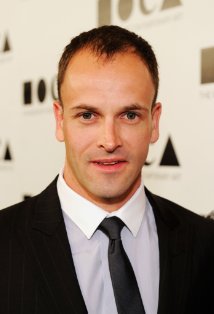
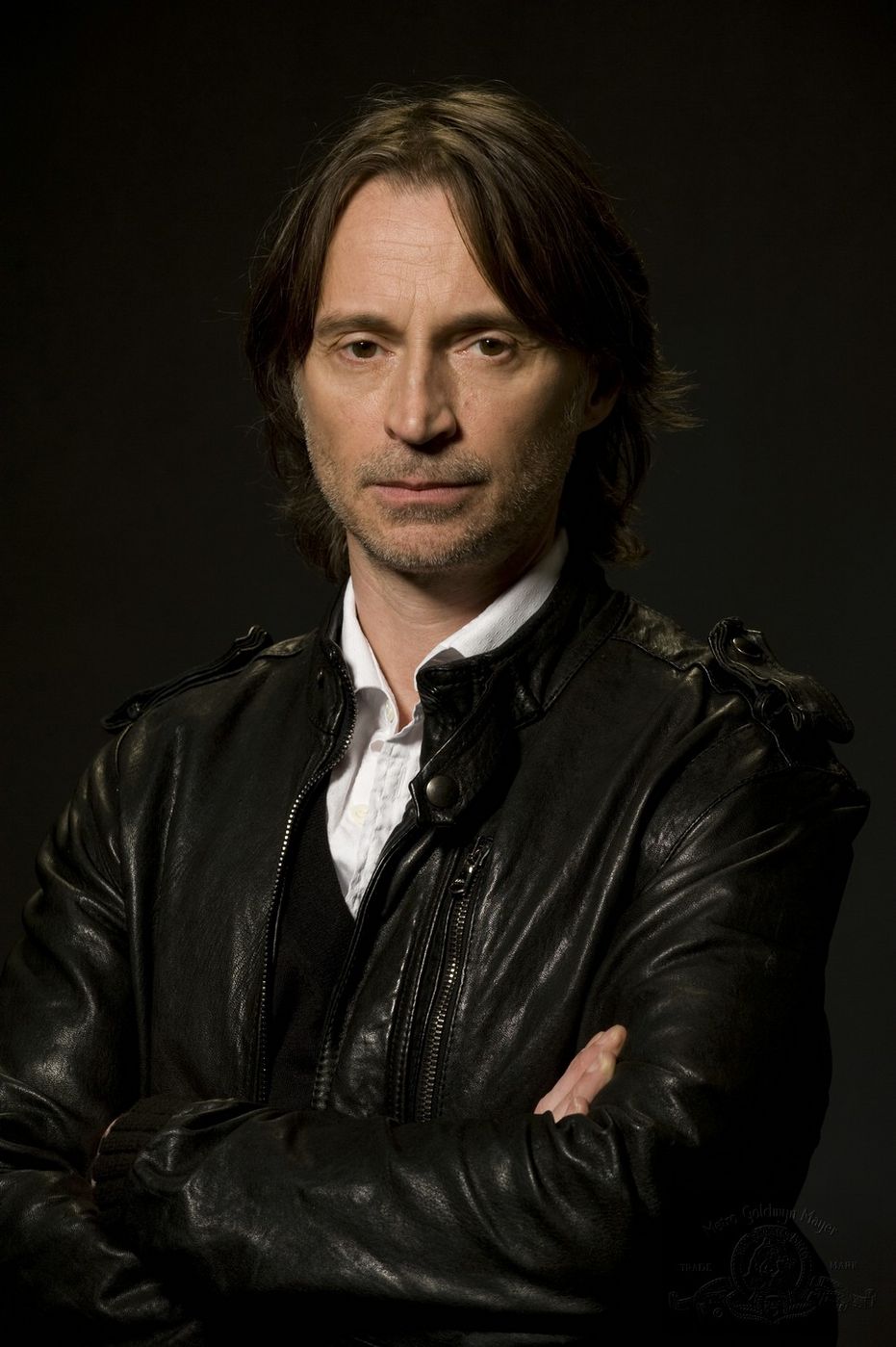
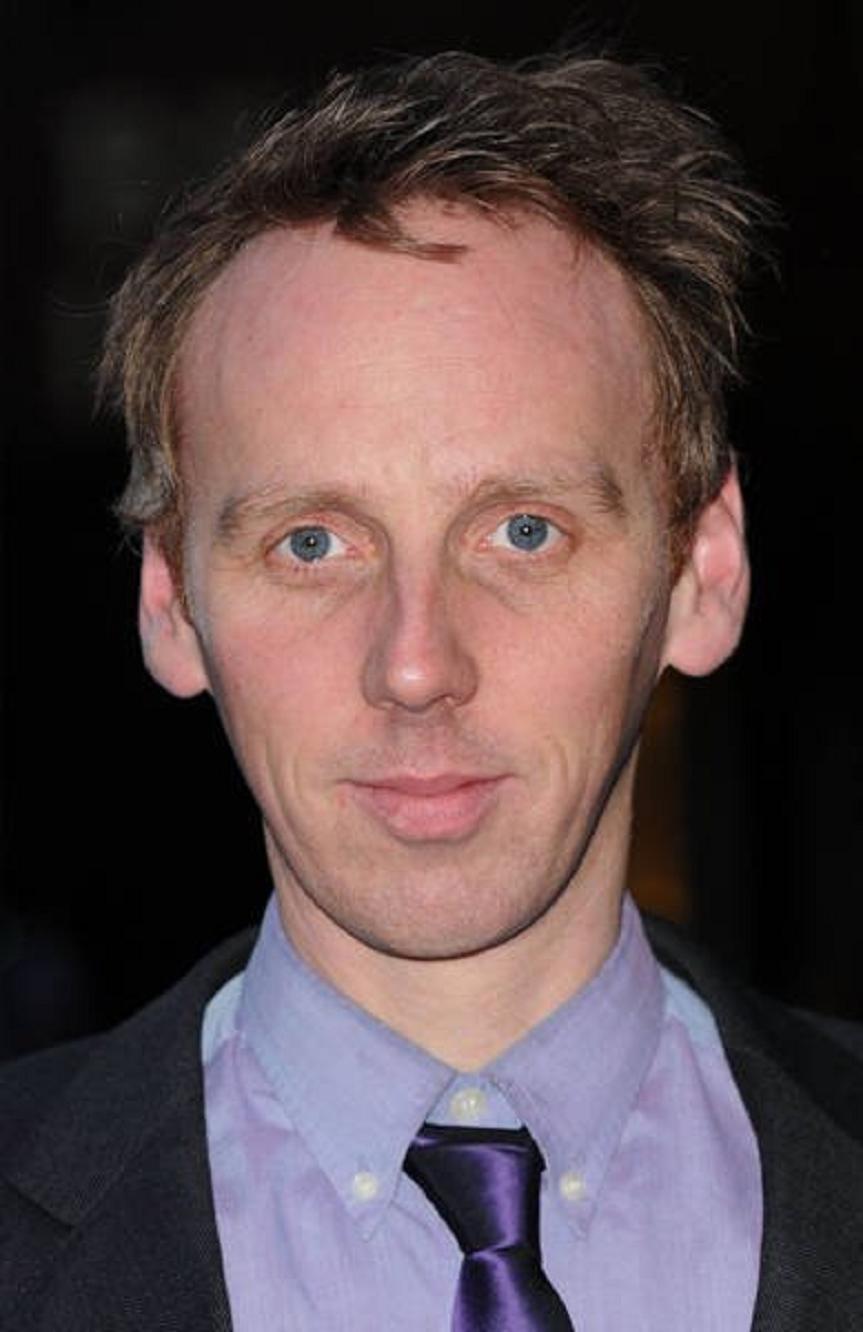
             The film spins in the journey of the heroin addict Mark Renton, played by Ewan McGregor, together with Johnny Lee Miller as the Amoral band artist Sick Boy; Ewen Bremner as the simple-minded, good natured Spud – both heroin addicts as well; Kevin McKidd as the clean-cut athlete; and Robert Carlyle as Begbie, who fights with whoever gets in his way. The story just flows on hitting, then quitting, then hitting drugs again by the aforementioned drug addicts. But in the end, Mark Renton was able to live a stable and traditional life, while Spud found a 2000$ Renton left for him.


                  The film occurred on several settings, each of which having its own characteristic in the film. Several types of shot were also observed. The opening of the film showed already a tracking shot, when Renton and Spud was being chased by store detectives; high-angle shot, when Renton was looking at the baby on the ceiling when he was hallucinating, close-up shot, when the director showed through Renton’s face the effect of the drugs to him. The film’s mise-en-scene has truly made something to make the film the best Scottish film of all time, in a general public poll, and garner almost universal praise from critics.

            In 1995, Trainspotting was nominated for three British Academy Film Awards. According to Danny Boyle, the sequel of the film may be released nine years after the original film.

- ClarissaAlimot

Sabado, Agosto 10, 2013

Movie Brats! (New Hollywood)


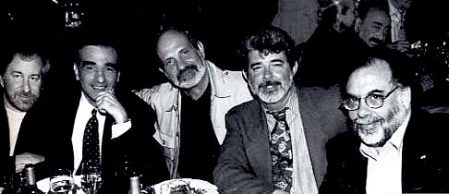
(Left to Right: Steven Spielberg, Martin Scorsese, Brian De Palma, George Lucas, Francis Coppola)

Early 1970’s, generation of young directors, sometimes called the movie brats made some successful films of all time. They are Francis Coppola, George Lucas, Martin Scorsese, Brian De Palma, and Steven Spielberg.

There are two kinds of directors: those who have the public in mind when they conceive and make their films, and those who don’t consider the public at all.


Francis Ford Coppola is the director of the award-winning film The Godfather who brought him several nominations and awards as well. According to Gary Kurtz, a producer of films, movies that Coppola produced was always aired no matter what it was all about, as long as it was long enough. Being said like that, I consider Coppola as a director who doesn't consider public in making films.

George Lucas is the creator of the blockbuster hit Star Wars. He mentioned in the documentary film of the film school generation that he once took the opportunity of a lifetime in making the THX 1138 without even considering if he’s career may be destroyed, which puts him on the idea of being a director who doesn’t consider the public at all. But according to Jonathan Taplin, a film producer, George Lucas came from a Middle American point-of-view which wanted to make movies that would move everybody, which also puts him on the contradicting type of director who considers the public in making films.


Steven Spielberg’s films include the three highest-grossing film made at the time – Jaws (1975), E.T. The Extra-Terrestrial (1982), and Jurassic Park (1993). Like George Lucas, Jonathan Taplin considers Spielberg as a director who wanted to make movies that would move everybody, which is I guess obvious already because he owns those three highest-grossing films, so no doubt he makes films that considers the public.
Those three directors were the only emphasized filmmakers that may belong to any of the two kinds of directors.


In my own point of view, Martin Scorsese is a director who considers the public because he made films that reflects some Hollywood typical arrogance. Brian De Palma is known for his suspense and crime thriller films, which I consider a director who considers public as well because he makes films that everybody would get their emotions attached to the film.

- ClarissaAlimot